
Placeholder
Planning to put my Patreon here when I've made a nice image to fit into the view.
Placeholder slotDr. Luche's Lab
We convinced Pikita to stop eating the page. Now you can finally scroll through the lab's facilities.
Books by Dr. Luche
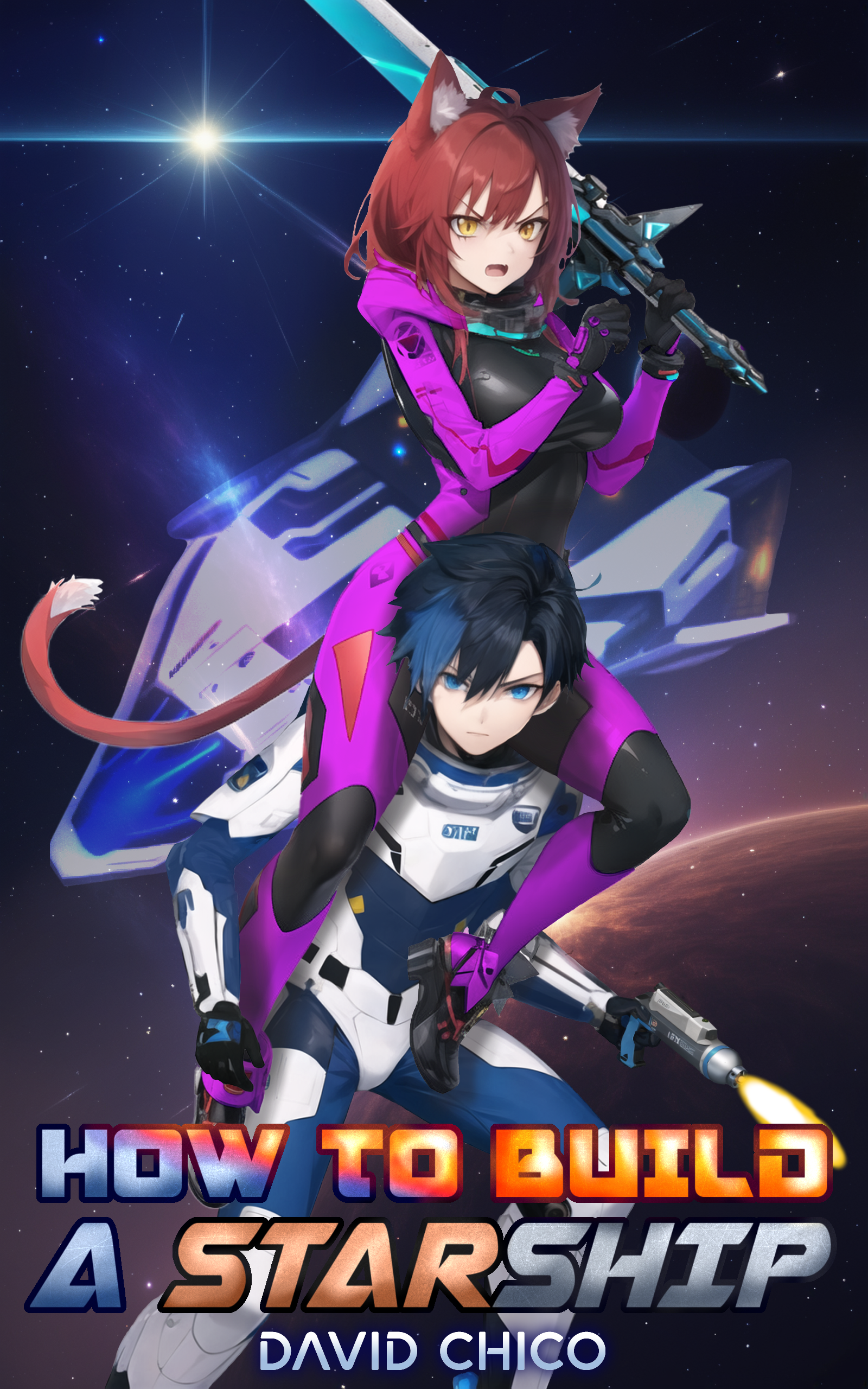
A base-building harem adventure about a would-be engineer trying to survive after his ship crashes (?) into a starship graveyard somewhere in deep space.
Written out of love for Reborn as a Space Mercenary and Rimworld, for a world with a severe lack of media about dating catgirls in the space age. I'd recommend it if you're into any of those things.
Don't look at the cover too closely! I'll be replacing it eventually.
Read for free on Royalroad
Planning to put my Patreon here when I've made a nice image to fit into the view.
Placeholder slotWeb projects
Does your friend owe you one too many drinks? Show him you've never stopped keeping track.
Except it's not normal drinks, but ice cream and Monster energy.
View experimentEver had issues tracking what you spend your time on?
It's a simple but customizable way to train your self-discipline.
Open 3.0Venture into the heart of what makes the lab tick.
This was the bounty of an ARG I once worked on.
Brave past the vault doors.Breaking character
This is essentially a portfolio site wearing a trench coat. Said trench coat is themed around the story of Dr. Luche and his robot lab assistant, Pikita. Someday, I'll make robotic plushies with my own hands. Until then, let this serve as a placeholder for this dream of mine.
A long time before the beginning of How to Build a Starship, a man known as Dr. Luche creates a lab assistant robot meant to break the mold of the sterile, uncanny machines we're used to. Instead, Pikita is built to be cute, endlessly silly and a bit of a troublemaker.
Early in his artificial life, though, Pikita's V.0 model with treaded legs falls down a flight of stairs and breaks. As he comes to inspect the noise, V.0 Pikita turns to him and apologizes for disappointing him before powering down. Despite knowing the robot wasn't anywhere near sentient, watching his innocent metal child die in his arms fills him with a resolve to make the next model absolutely indestructible.
As the version number increases, Dr. Luche delves into more and more outlandish projects that result in world-spanning technological breakthroughs.
The final version 5.0 is a self-improving nanomachine swarm surrounding a miniaturized fusion reactor, which renders its expressions on a plush-like surface by dynamically embroidering itself at ludicrous speeds.
Pikita's directive is to be infinitely silly. Children must grow out of naivete eventually and harden themselves against a cruel world. This invincible machine can never be destroyed, and as such he can allow himself to endlessly wander the universe with the curiosity of a baby and the bravery of a warmachine.
In the novel, Pikita is known as the mascot of the company but rarely makes direct appearances. However, his fate is intertwined with the destiny of the universe. One of the novel's overarching themes is the differentiation between man and machine, and sentient robots' quest to acquire what can be called a soul. And perhaps someday the Scion of the Star Age will face that dilemma himself.
Does he who has achieved the truest form of silliness even need a soul? Or is there something beyond for him to discover, something only a man's irrational, selfish project could hope to achieve?
Because he's been a good plushy
By submitting the form, you accept our terms and conditions.